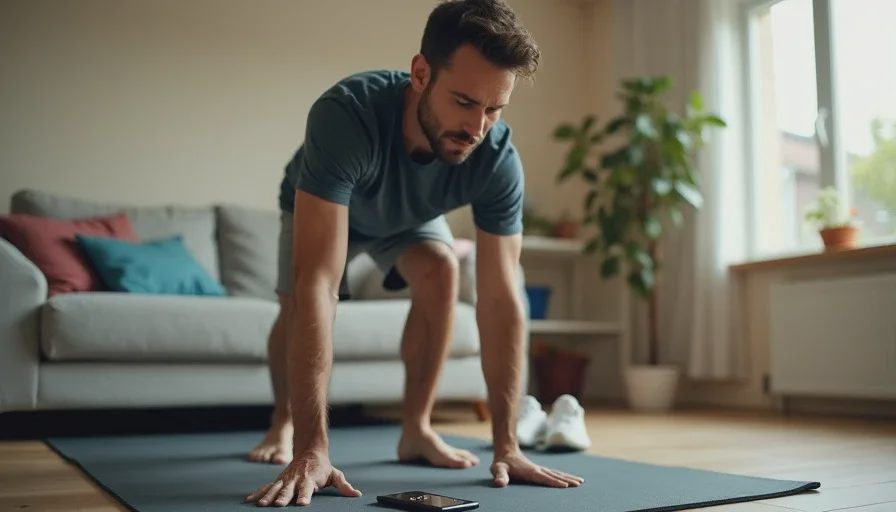
If you've ever stared at your sneakers and felt like the whole idea of working out was too much, you're not alone. The first rep is the hardest — not because your muscles can't handle it, but because your brain has been told that exercise is a punishment. I've coached thousands of everyday adults, and nearly all of them told me the same thing: starting is the worst part. Once they got moving, it felt fine. The hardest part of any beginner workout routine with no equipment is simply deciding to begin.
I'm Corey Nelson. For 12 years, I worked as a trainer and fitness director at a big-box gym in Omaha, Nebraska. I've seen every excuse, every false start, and every person who thought they were too far gone to try again. Here's what I learned: you don't need a gym, you don't need a perfect plan, and you don't need to be motivated. You need a small, repeatable first step. That's what this post is about.
Why the First Rep Feels Like a Wall
Your brain is wired to avoid discomfort, and exercise is uncomfortable — especially if you've been away from it for a while. Add in years of "no pain no gain" messaging, and you get a wall of dread before you even start. You think you need to sweat through an hour of burpees to make it count. You think you need a gym membership, a trainer, and a meal plan. You think if you can't do it perfectly, it's not worth doing at all.
That's a lie. The first rep only feels hard because you're trying to jump the whole wall instead of stepping over one brick. When I worked with a client named Mike — a 46-year-old accountant who hadn't exercised since high school — he told me he'd rather do his taxes than go to the gym. So we didn't go to the gym. We started in his living room with two minutes of marching in place. That was it. The next day, two minutes again. A week later, he added a sit-to-stand from a kitchen chair. Six months after that, he could hike with his kids without gasping. The wall didn't fall down; he just stopped trying to climb it all at once.
Start Smaller Than You Think
The biggest mistake beginners make is starting too big. If your first workout is 45 minutes of high-intensity moves, your brain will mark exercise as a threat and avoid it. Instead, start with something so small it feels almost silly. This is how you build the habit before the fitness.
The Two-Minute Rule
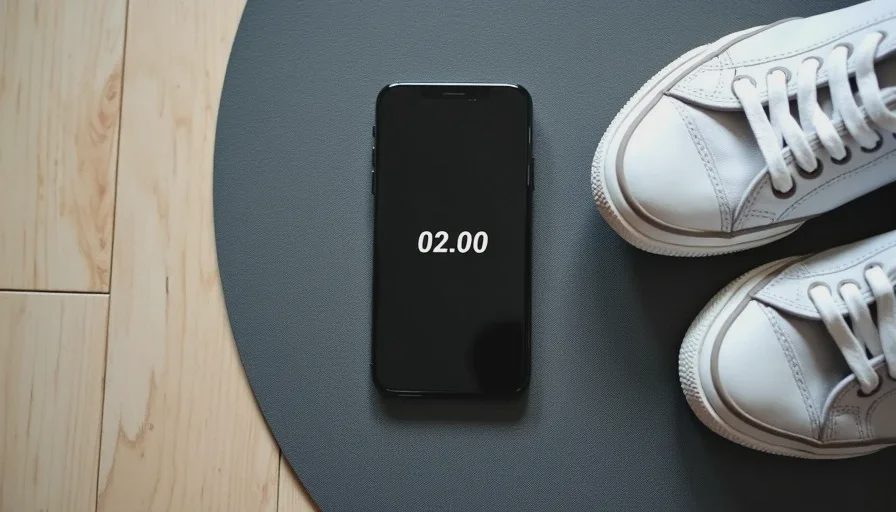
When you don't feel like working out, commit to just two minutes. Set a timer on your phone, stand up, and do something — march in place, stretch your arms, walk around the living room. If after two minutes you want to stop, stop. No guilt. But more often than not, once you start moving, you'll keep going for a few more minutes.
This works because it removes the pressure. You're not deciding to "work out." You're deciding to move for 120 seconds. Anyone can do that. It's a small win that builds trust with yourself.
The 15-Minute Floor Plan
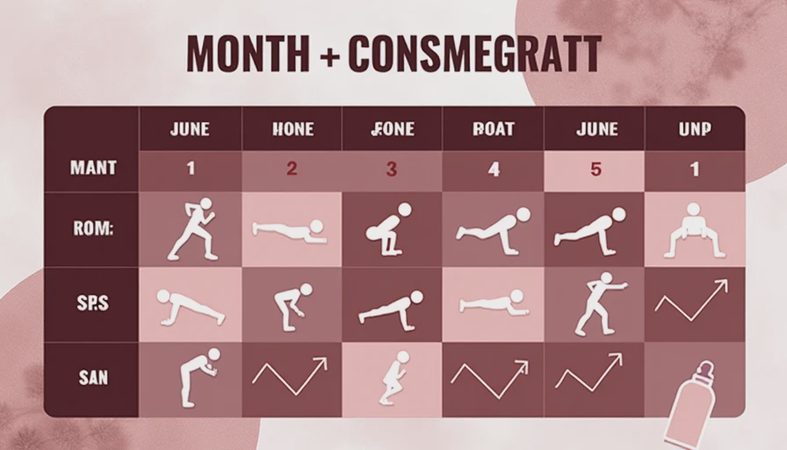
Once you're comfortable showing up, try a 15-minute beginner workout with no equipment. Here's a simple routine I use with new clients:
2 minutes of marching in place or walking around the room
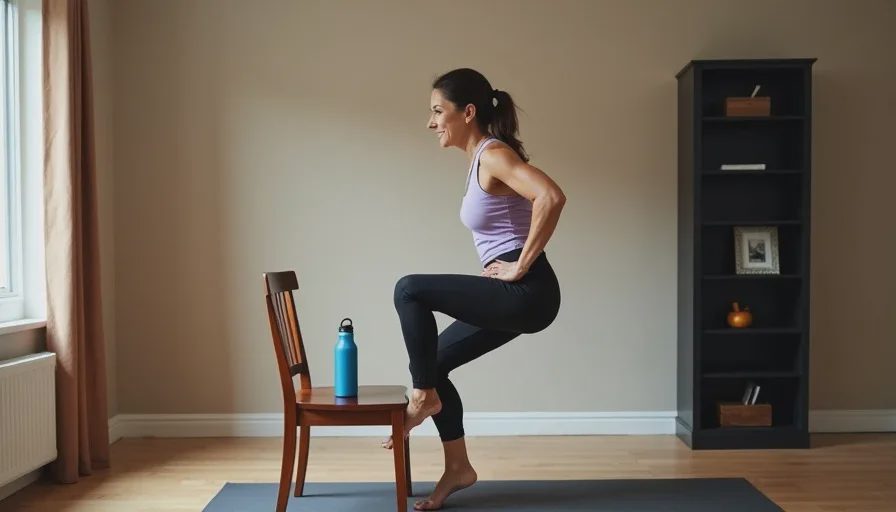
10 sit-to-stands from a sturdy chair (3 sets, rest 30 seconds between)
10 wall push-ups with your hands on a wall or counter (3 sets)
10 standing hip hinges, pushing your hips back like you're closing a car door with your butt (3 sets)
2 minutes of gentle stretching — reach for the ceiling, touch your toes, roll your shoulders
That's it. No jumping, no equipment, no gym. You can do this in your living room before the kids wake up or after they go down. The goal is not to exhaust you. The goal is to show your body and brain that movement is safe, doable, and even a little energizing.
What to Do When You Miss a Day
You will miss a day. Maybe a kid gets sick, or work runs late, or you just don't feel like it. Here's the rule: missing one day is not failing. Missing one day and then telling yourself you've blown it and giving up — that's the real problem.
I tell my clients to use the "never miss twice" rule. If you miss a day, that's fine. But the next day, do something — even if it's just the two-minute version. This keeps the habit alive. Think of it like brushing your teeth. If you forget one night, you don't stop brushing forever. You just brush the next morning.
Another thing: don't try to "make up" missed workouts with double sessions. That's a recipe for soreness and resentment. Just pick up where you left off. Fitness is a long game, not a debt to repay.
How to Start Over Without Feeling Like You Failed
A lot of people come to me after quitting a gym membership or falling off a plan. They feel ashamed, like they've wasted something. Here's what I tell them: quitting doesn't erase what you learned, and starting over is not a failure. It's a restart.
I once coached a woman named Sarah who had tried and quit six different workout programs in three years. She told me she felt like a walking before-and-after photo that never got to the "after." We didn't go back to the gym. We started with a 10-minute walk around her block after dinner. Then we added two strength moves on her living room floor. She's been consistent for two years now, not because she found more willpower, but because she stopped trying to be someone she wasn't.
If you've quit before, you don't need to punish yourself. You need a smaller plan and a kinder voice. The first rep is hard, but the second rep is easier. And by the time you hit the fifth rep, your brain has already stopped arguing.
Show Up. Sweat a Little. Come Back.
That's my signature phrase, and it's the whole philosophy of this blog. You don't need to feel amazing after every workout. You don't need to see results in a week. You just need to show up, move a little, and come back the next day. That's how a habit is built — not with motivation, but with repetition.
So here's your first assignment: set a timer for two minutes right now and march in place. If that's all you do today, you've already won. Tomorrow, do it again. The first rep is the hardest, but it's also the only one that matters.


No comments yet — be the first to share a thought.