Disclosure: This post contains affiliate links. As an Amazon Associate, Show Up & Move earns from qualifying purchases at no extra cost to you. I only recommend gear I've actually tested with my own clients.
Five color-coded loop bands that turned "I have no equipment" into a real strength session in my living room — and in plenty of my clients' living rooms too. After months of recommending them and testing the set myself, here's my honest review of the JAKKOFOXX resistance loop bands: the levels, the limits, and who should actually buy them.
Why I Finally Stopped Sending Beginners to the Dumbbell Rack First
Twelve years on gym floors taught me that the most common reason people skip a workout isn't laziness — it's "I don't have the equipment." New clients show up convinced they need dumbbells, a bench, and a membership before they're allowed to get stronger. So they buy nothing, do nothing, and feel guilty about both.
The second mistake is buying the wrong bands. I've watched people gamble on cheap sets that roll up mid-set, pinch skin, or snap on the third use. That's not a gear problem; it's a trust problem. One bad purchase and they write off home training for another year.
That's why I started pointing everyone toward a five-band loop set instead of a rack. Loop bands are the most forgiving equipment I know: they can't drop on your foot, they need no adjusting between sets, and they disappear into a drawer when you're done. It's the first thing I recommend before any dumbbell, and after months of using them in my own livestreams and handing them to clients, these are the ones I keep recommending.
What the JAKKOFOXX Set Actually Is
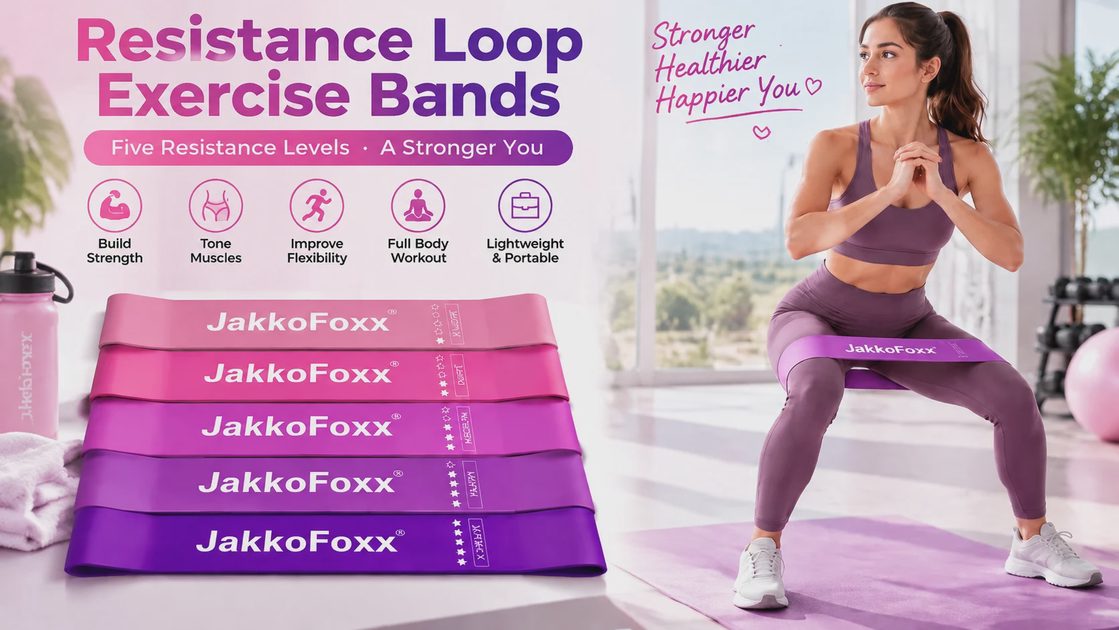
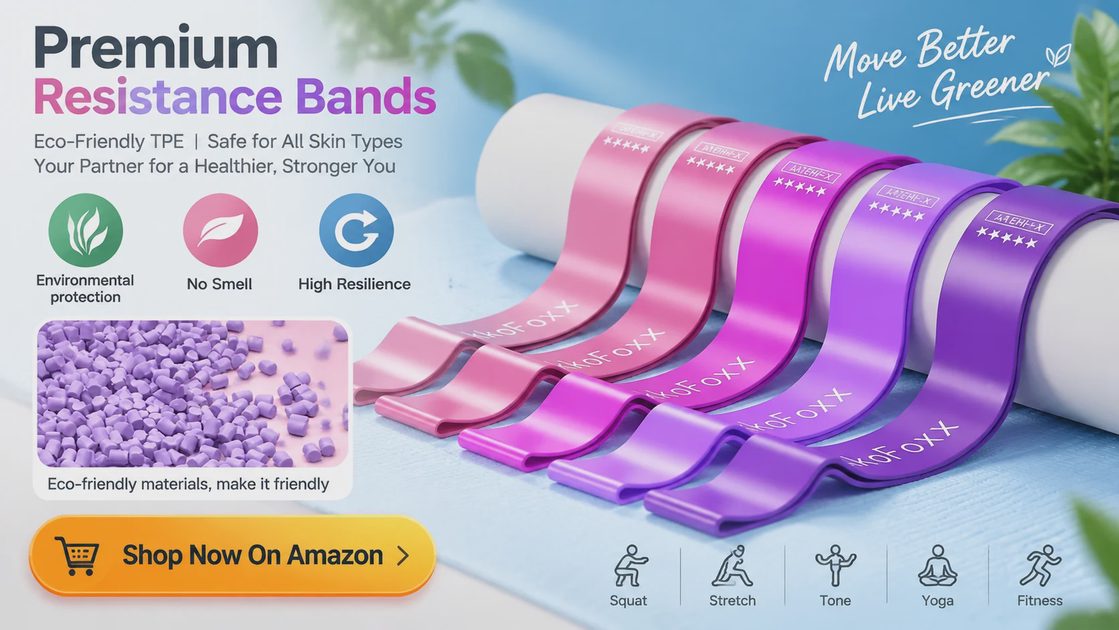
The JAKKOFOXX set is exactly what it sounds like: five flat loop bands, each 12 inches by 2 inches, in five color-coded resistance levels from X-Light to X-Heavy. They're molded from an eco-friendly TPE material that the brand markets as latex-free — smooth, powder-free, and genuinely odorless out of the bag, which is the first thing people comment on.
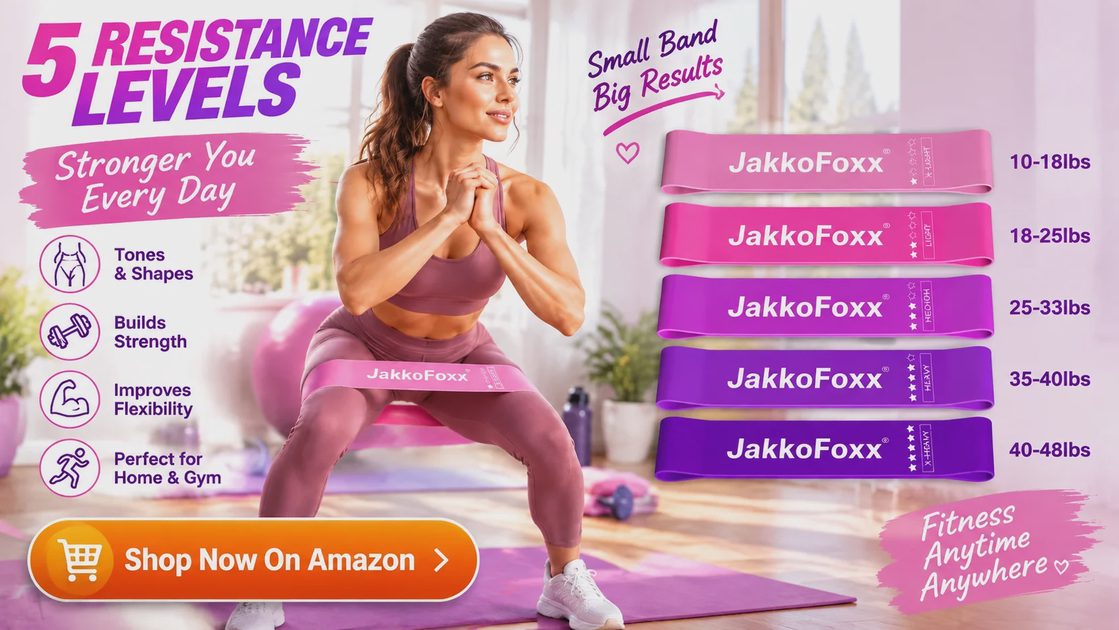
What makes this different from a single band is the range. The lightest band sits at 10 to 18 pounds of resistance; the heaviest goes up to 40 to 48. That means one pack serves a total beginner and someone who has been training for a year, which is rare at this price.
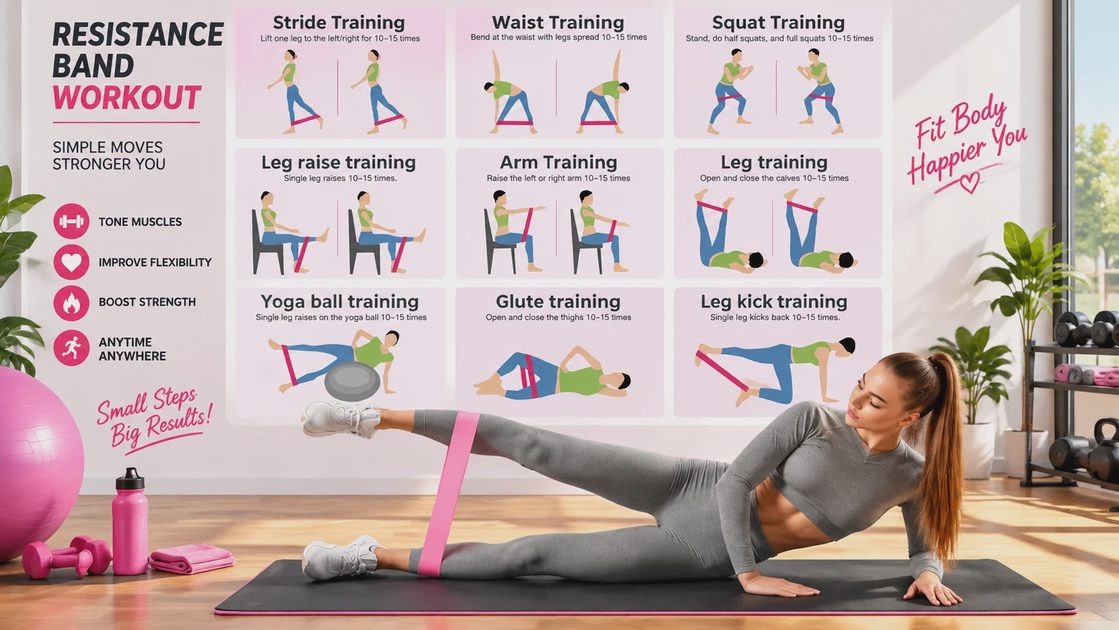
You also get a small carry bag and a printed exercise guide. The guide lays out nine basic moves — squats, glute work, leg raises, arm raises, and the rest — each with rep counts, so a brand-new lifter isn't left wondering what to do with them. For a beginner, that guide answers the two questions every new lifter asks: which band do I use, and what do I do with it.
Detail | My take |
What's in the pack | Five loop bands, a carry bag, and a printed exercise guide |
Band size | 12" × 2" each — sits above or below the knee without rolling |
Resistance levels | Five color-coded steps, X-Light (10–18 lbs) to X-Heavy (40–48 lbs) |
Material | Eco-friendly TPE, marketed latex-free — smooth and odorless |
Grip | Flat, smooth surface that stays put mid-set |
Care | Wipe clean; store away from direct sun and heat |
Value | Five useful tools for less than the price of one cheap dumbbell |
Real Testing: A Month of Living-Room Sessions
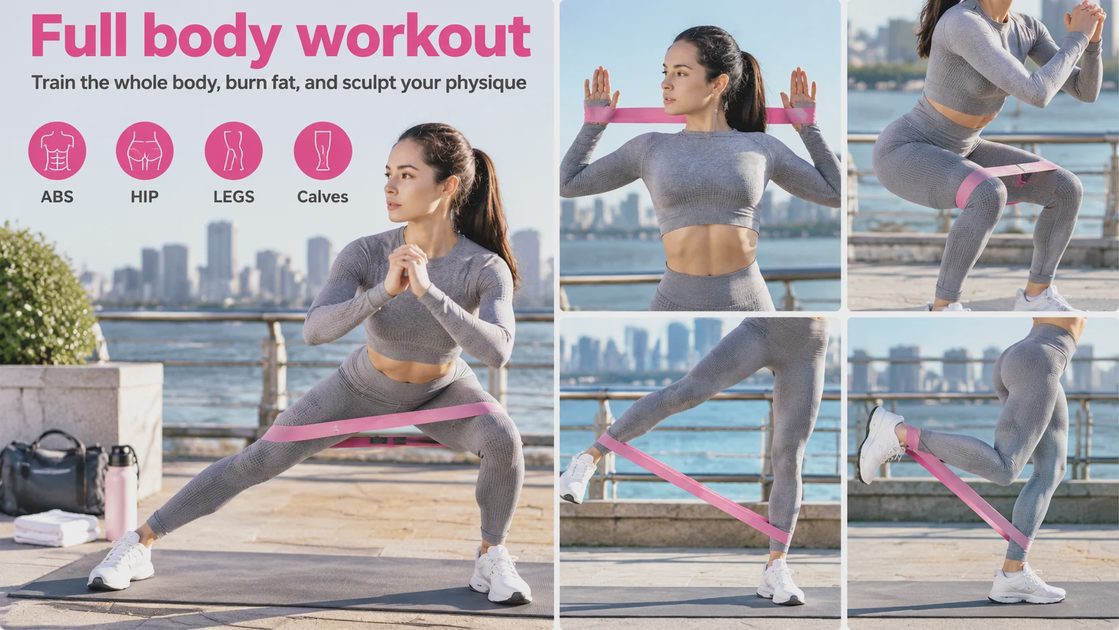
I spent a month putting these through the same sessions I run in my livestream — squats, hip thrusts, lateral walks, rows, core work — and I handed a pack to a few clients at different fitness levels to see where they landed.
The first thing I noticed is how much easier the levels make coaching. A total beginner grabs the X-Light band and learns the movement pattern without fighting the resistance; someone who has been at it a year reaches for the Heavy and still gets a burn. One pack covers a whole group, which is rare at this price.
The bands also stay put. Flat loop bands are supposed to lay flat, and these do — no rolling, no bunching, no pinching — which is the thing that kills most cheap band workouts. The surface is smooth against skin, and after a couple of sessions the color coding becomes second nature: I grab the deep purple when I want a fight and the pale pink when I want to move well first.
I also took the heaviest band into a heavier session to find the ceiling. At 40 to 48 pounds of resistance, the X-Heavy delivers a genuine squat and hip-thrust burn — not a toy, and not a barbell, but a real middle step that fills the gap between bodyweight work and dumbbells. That's exactly where most of my clients live, and it's the level I reach for on days when the livestream runs long on lower-body work.
What worked well:
The five levels are genuinely distinct. It's not five shades of the same band; each step feels meaningfully harder.
The TPE has no chemical smell out of the bag — a small thing that matters when gear lives in your gym bag for a week.
The guide and carry bag answer the two questions every beginner asks: which one do I use, and where do I put them.
The bands are light enough to throw in a suitcase, and I've had clients pack them for work trips without thinking twice.
The feedback I keep hearing from people using them in recovery — after knee surgery, after a C-section, during physical therapy — is that the light bands give them a way to load muscles gently when nothing else feels safe.
Where They Fall Short
I don't want these to sound perfect, because no gear is. A few honest notes before you buy.
The lighter bands can snap under heavy use. This is the most common complaint in the reviews, and I understand why: people grab the X-Light and crank it like it's the Heavy. In my testing the medium and heavier bands held up fine, but a small number of owners report the lightest bands tearing after repeated hard stretching. Check yours for wear before each session and don't stretch any band past about double its length.
A few sensitive users report itching. The brand markets these as latex-free TPE, and most people have zero reaction, but a handful of reviewers describe skin irritation. If you have a known sensitivity, test a band on your forearm for a minute before your first full session.
The two-inch width isn't for everyone. Women with thicker thighs in particular report the bands rolling up and digging in during lower-body work — that's a fit issue, not a quality issue, and cloth bands are a better match for them.
They're not a substitute for heavy weights at the top end. Once you're doing advanced lower-body work, you'll want dumbbells or a barbell alongside them.
Who These Actually Suit
These make the most sense for beginners who aren't sure they'll stick with a routine and don't want to spend real money before they know — five levels, a guide, and a bag for less than the cost of one cheap dumbbell is a low-risk way to find out. They also suit travelers who want a full-body session in a hotel room, anyone doing physical therapy or coming back from an injury, and people who just want a warm-up tool before the gym.
They're also a smart second purchase for someone who already owns dumbbells but wants warm-up work that travels — I keep a set in my own gym bag for hotel-room sessions when I'm on the road.
They're less useful if you already train heavy, if you have latex sensitivities and don't want to gamble, or if you have very large thighs and prefer wider, cloth-style bands.
The Price Is the Part That Surprises People
Here's the number that gets everyone's attention: the set lists around \(13.95, and it spends a lot of time in the \)7 range — it's $7.16 on Amazon as I write this. Five bands, a carry bag, and a guide for less than the price of a single premium tube band, which gives you one resistance level. You could spend more on one dumbbell that sits in the corner; this folds into a bag and goes wherever you train.
Which Band Should You Start With?
Level | Resistance | Who It's For | What I Use It For |
X-Light | 10–18 lbs | Total beginners, rehab, warm-ups | Arm work, lateral raises, waking up the glutes |
Light | 18–25 lbs | Newer lifters, upper-body focus | Rows, presses, band pull-aparts |
Medium | 25–33 lbs | Steady progress, full sessions | Squats, hip thrusts, core work |
Heavy | 35–40 lbs | Stronger lifters, lower-body focus | Glute bridges, standing abductions |
X-Heavy | 40–48 lbs | Advanced home sessions | Heavy hip hinges, deadlift-style pulls |
The JAKKOFOXX Set vs. What Most Beginners Actually Buy
Feature | Cheap Single-Color Bands | |
Resistance range | Five levels in one pack | One size, zero progression |
Mid-set behavior | Stays flat, no rolling or pinching | Roll up and bunch once you sweat |
Extras | Carry bag and printed guide included | Bag maybe, guide rarely |
Build | Smooth TPE, odorless out of the bag | Hit-or-miss seams and smell |
Who it suits | Beginner to advanced in one purchase | "Try it and hope" |
The Practical Takeaway
I recommend these because they remove the two reasons beginners quit: no equipment and no plan. Five bands, a little guidance, and a price that makes trying feel safe. That's the whole argument — grab the JAKKOFOXX set and start with the lightest band tomorrow.
Quick Spec Summary
Product: JAKKOFOXX Resistance Loop Exercise Bands, Set of 5 (Assorted)
ASIN: B097JQYZR1
What's included: five loop bands (X-Light to X-Heavy), carry bag, printed exercise guide
Band size: 12" × 2" each
Resistance range: 10 to 48 lbs across the five levels
Material: eco-friendly TPE, marketed latex-free
Care: wipe clean; store away from direct sun and heat
FAQ
F: How fast is shipping, and what if I want to return them?
A: This is an Amazon Prime-eligible listing, so Prime members usually get free two-day shipping and some locations qualify for next-day delivery. Non-Prime orders above Amazon's free-shipping minimum ship free with standard delivery in roughly three to five business days, with faster options available at checkout. Amazon offers the standard 30-day return window, and most addresses get free returns with a prepaid label, so if they don't work for you, sending them back costs nothing.
F: Are these bands latex-free?
A: The brand markets them as latex-free and made from TPE, a powder-free, odorless material, and most buyers report no reaction at all. That said, a small number of sensitive users describe itching, so if you have a known latex or rubber sensitivity, do a quick test on your forearm before your first full workout.
F: How do I tell the resistance levels apart?
A: The levels aren't printed on the bands themselves, so you rely on the color coding — the lightest band is a pale pink and the heaviest is a deep purple, with three shades between them. Each color maps to a specific level in the included guide; after a session or two you'll have it memorized. If you're buying for a partner too, keep the guide in the carry bag so you both know which color is which.
F: Is there a real risk of the bands snapping?
A: Any elastic band can fail if it's overstretched, nicked, or left in the sun, and the lightest band is the most vulnerable if you treat it like a heavy one. Check yours for small tears before each session, don't stretch them past about double their length, and store them in the bag away from heat. Handled that way, mine have lasted for months.
F: Can I use them on carpet or hardwood floors?
A: Yes — that's the beauty of loop bands, they anchor around your body rather than the floor. For lower-body work on hardwood, a yoga mat gives you a little more stability and protects the band from rough surfaces. Keep them away from sharp furniture edges and pet claws.
F: Can kids use these bands?
A: Kids can absolutely use them for light resistance and warm-ups — the X-Light and Light bands are gentle enough for young athletes. Just supervise the first few sessions, start them on the lightest band, and teach them not to overstretch or snap the band. A couple of reviews mention bands breaking when an older kid cranked on them, so set the ground rules early.
F: Are these suitable for physical therapy or coming back from an injury?
A: This is one of the most common reasons people buy them. The X-Light and Light bands are gentle enough for rehab-style work — rotator cuff, hip, and knee exercises — and I've had clients and readers use them while recovering from knee surgery and after childbirth. Start light, keep movements pain-free, and clear the exercises with your physical therapist first.
Show up. Sweat a little. Come back.

No comments yet — be the first to share a thought.