If you sit at a desk, drive to work, lift kids, or spend most of the day with your hips bent, learning how to stretch psoas can make your movement routine feel much better. The psoas is a deep hip flexor that connects your lower spine to your upper thigh. You cannot grab it directly like a hamstring, but you can create a useful stretch by positioning your pelvis, ribs, and back carefully.
This is not a dramatic, pain-filled flexibility test. A good psoas stretch should feel steady across the front of your hip or into your lower abdomen, not sharp in your back or pinching at the hip joint. Start with five to ten minutes, breathe normally, and give your body time to respond. Show up. Sweat a little. Come back.
Why the psoas can feel tight
The psoas helps lift your thigh toward your torso, which is called hip flexion. It works when you climb stairs, walk, run, stand from a chair, or bring one knee toward your chest. Sitting keeps the hip in a shortened position for a long time, so the muscle can feel stiff when you finally stand up.
That stiff sensation does not always mean the psoas is literally too short. Your body may simply be guarding a position it has repeated all day. Weak glutes, limited ankle movement, poor breathing mechanics, or an irritated lower back can also make the front of the hip feel restricted. That is why the goal is not to force a huge range of motion. The goal is to make a calm position feel more available.
Before you begin, take a relaxed walk around the room or do two minutes of gentle marching. Warm tissue generally tolerates movement better than completely cold tissue. If you have recent hip surgery, significant back pain, numbness, tingling, or pain that travels down your leg, ask a qualified health professional for individual guidance before trying these exercises.
The half-kneeling psoas stretch
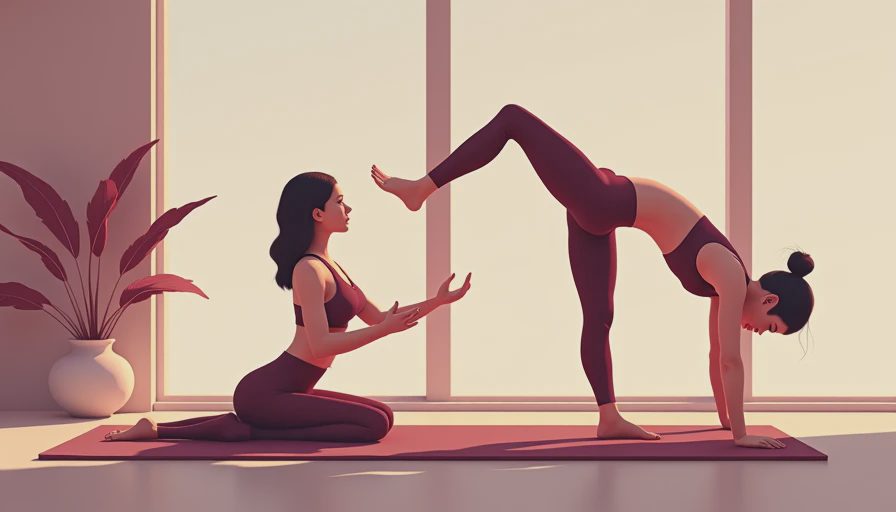
The half-kneeling position is the simplest place to learn how to stretch psoas because it gives you a clear way to control your pelvis. Kneel with your right knee on a folded towel and place your left foot in front, with the left knee roughly over the ankle. Keep your torso tall and gently squeeze the right glute.
Now imagine bringing your belt buckle slightly toward your ribs. This is a small tuck of the pelvis, not a hard crunch. Without leaning backward or arching your lower back, shift your whole body forward a few inches. You should feel the stretch in the front of the right hip. Hold for 20 to 30 seconds, breathe slowly for three or four breaths, then switch sides.
The glute squeeze matters because it helps move the hip into extension while keeping the pelvis organized. If you only lunge forward with an arched back, the movement can come from the spine instead of the hip. Repeat two times per side. If kneeling bothers your knee, place more padding underneath it or use a standing version beside a wall.
A standing option for busy days
A standing variation is useful when you are at work, traveling, or waiting for dinner to finish. Stand beside a counter or wall for balance. Step your right foot behind you, keeping the heel lifted. Bend the front knee slightly, squeeze the right glute, and gently tuck your pelvis. Keep your ribs stacked over your hips rather than flaring them forward.
Shift your weight toward the front leg until you notice a mild stretch at the front of the rear hip. Hold for 15 to 25 seconds, then release slowly. Repeat on the other side. This version is less stable than half-kneeling, so keep the range modest and use support. If you are wondering how to stretch psoas without getting down on the floor, this is a practical answer.
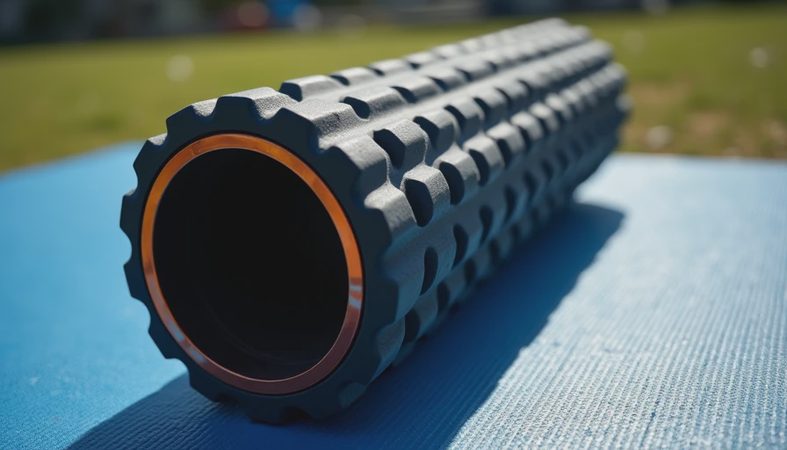
Try it after a long drive or every hour during a desk-heavy afternoon. Two short rounds are enough. You do not need a special belt, expensive mobility tool, or an hour-long routine to make this useful.
Pair the stretch with active movement
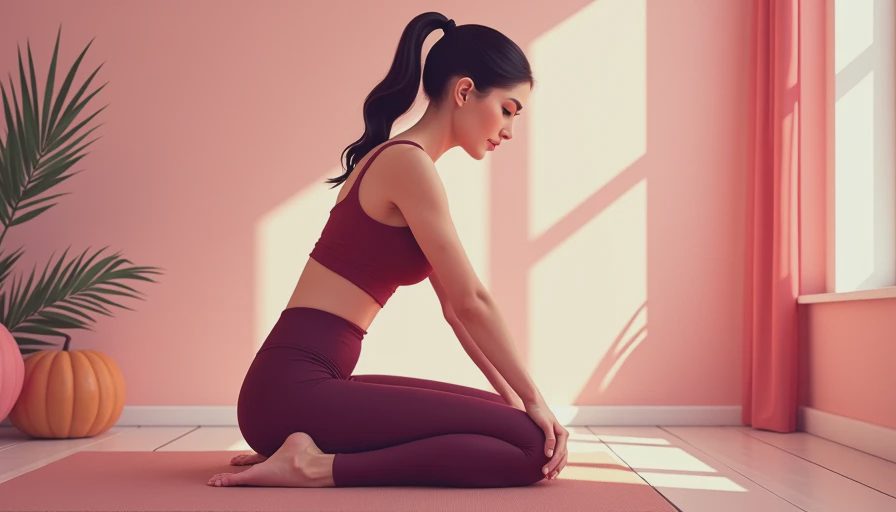
Stretching is only one piece of better hip mobility. After a passive hold, follow it with a controlled movement so your body can practice using the new position. A simple option is a glute bridge. Lie on your back with your feet flat and knees bent. Exhale, gently tighten your stomach, press through your feet, and lift your hips until your body forms a comfortable slope from shoulders to knees.
Pause for one second at the top, then lower with control. Do eight to twelve repetitions. You should feel your glutes working more than your lower back. This pairing helps you learn how to stretch psoas while also asking the opposite muscles to contribute when your hips extend.
Another option is a slow split-stance reach. Stand with one foot forward and one foot back, lightly bend both knees, and reach both arms overhead without leaning into your lower back. Keep the movement small. Three to five controlled repetitions per side can be enough after your hold.
A simple 10-minute routine
Here is a realistic sequence for a morning, lunch break, or evening reset. Begin with two minutes of walking or gentle marching. Move into the half-kneeling stretch for two 20-second holds on each side. Follow with eight glute bridges and five slow split-stance reaches per side. Finish with one relaxed round of the standing stretch.
Move at about a three or four out of ten intensity. You should be able to breathe and speak normally. A mild pulling feeling is acceptable; sharp pain, catching, cramping, or increasing back pressure is a reason to stop and change the position. Many beginners make faster progress with a short routine they repeat four or five days per week than with one aggressive session on Sunday.
If you spend eight hours sitting, add movement rather than relying only on stretching. Stand for a phone call, walk to refill your water, or perform five bodyweight squats beside your desk. The psoas responds to your whole-day habits, not just the few minutes on the mat.
Common mistakes and when to get help
The biggest mistake when people learn how to stretch psoas is chasing intensity. Leaning farther, arching harder, or holding your breath does not automatically create a better result. Keep the ribs down, maintain a gentle pelvic tuck, and stop before the stretch turns into a backbend.
Another mistake is assuming every front-of-hip sensation comes from the psoas. Hip joint irritation, a strained muscle, lower-back problems, and other conditions can feel similar. If symptoms last for several weeks, interfere with sleep, cause weakness, or include numbness or tingling, schedule an evaluation with a physical therapist or medical professional.
For ordinary desk stiffness, start small and track how you feel afterward rather than judging success by how far you can lunge. The best version of how to stretch psoas is the one you can perform calmly, consistently, and without pain. Give the routine a week, notice whether standing and walking feel easier, and adjust from there.

No comments yet — be the first to share a thought.