If your workday lunch is whatever is left in the break room, you are not failing at nutrition. You are probably busy, hungry, and making a decision with five minutes between meetings. The best high protein lunches for work are not fancy meal-prep sculptures. They are meals you will actually pack, enjoy, and remember to eat before 3 p.m.
Protein helps a meal feel more satisfying, while carbohydrates provide useful energy and vegetables, fruit, or beans add fiber and micronutrients. You do not need to chase a perfect number at every meal. A practical target is often 25 to 40 grams of protein, depending on your size, activity, and overall eating pattern. If you have kidney disease or a medically prescribed diet, ask your clinician for personalized guidance.
Build a work lunch with four simple parts
Start with a reliable protein: chicken, turkey, tuna, salmon, eggs, Greek yogurt, cottage cheese, tofu, tempeh, beans, or lentils. Add a carbohydrate you genuinely like, such as brown rice, potatoes, whole-grain bread, farro, quinoa, or a tortilla. Then include produce for crunch, color, and fiber. Finish with a sauce or fat that makes the meal satisfying: avocado, olive oil dressing, hummus, salsa, pesto, or a yogurt-based dip.
This formula prevents the sad salad problem. A bowl of greens with a few slices of turkey might look virtuous, but it can leave you hunting for cookies at 2:30. A chicken salad with potatoes, chickpeas, tomatoes, and dressing is more substantial and still easy to portion. High protein lunches for work should feel like lunch, not a punishment disguised as a container.
Think in combinations rather than recipes. Leftover taco meat becomes a rice bowl. Roast vegetables become a frittata filling. A can of tuna becomes a sandwich, lettuce cup, or pasta salad. This is how you reduce cooking time without eating the exact same meal four days in a row.
Five dependable ideas that need little cooking
A Greek yogurt bowl can work when mornings are chaotic. Combine plain Greek yogurt with berries, oats, chopped walnuts, and a spoonful of peanut butter. For more staying power, add a hard-boiled egg on the side. Choose unsweetened or lightly sweetened yogurt and adjust the portion based on hunger rather than forcing a tiny serving.
A chicken hummus wrap takes about five minutes if the chicken is already cooked. Spread hummus on a whole-wheat tortilla, add sliced chicken, spinach, cucumber, and peppers, then roll it tightly. Pack grapes or an orange alongside it. A deli turkey version is also convenient; look for a lower-sodium option when that matters to you, but do not let the search for a perfect product stop you from eating lunch.
Try a tuna and white bean bowl for a pantry-friendly option. Mix tuna, rinsed cannellini beans, chopped celery, lemon juice, olive oil, and black pepper. Eat it over greens or with whole-grain crackers. The beans add fiber and make a single can of tuna feel like a complete meal.
Egg muffins are useful on Sunday, but they do not need to be beautiful. Whisk eggs with cottage cheese, spinach, and leftover vegetables, bake in a muffin tin, and refrigerate. Pair two or three with toast and fruit. For a plant-forward meal, use baked tofu with edamame, rice, shredded cabbage, and a ginger-soy dressing.
Prep high protein lunches for work in less time
The goal is not spending your entire Sunday surrounded by twelve identical containers. Give yourself a 30-minute assembly window. Cook one protein, prepare one carbohydrate, wash or chop two vegetables, and buy one ready-to-eat helper. A rotisserie chicken, microwaveable brown rice, baby carrots, and store-bought hummus can produce several useful meals without turning your kitchen into a catering operation.
For example, shred two cups of chicken while rice heats. Divide the chicken between a wrap, a rice bowl, and a salad. Add different sauces so the meals do not taste repetitive: salsa for the bowl, hummus for the wrap, and a lemon vinaigrette for the salad. This small change matters because flavor boredom is one of the fastest ways a good intention collapses.
Store wet ingredients separately when possible. Keep dressing, salsa, and crunchy toppings in small containers, then combine them at lunch. Refrigerate perishable food promptly, use an insulated lunch bag with an ice pack, and avoid leaving meat, eggs, dairy, or cooked rice at room temperature for several hours. A leakproof container is not glamorous, but it can save your laptop bag and your afternoon.
Make the portions practical, not punishing
A lunch that looks reasonable on paper can be too small for an active adult, especially if breakfast was light. If you are hungry again within an hour, first add food rather than blaming your willpower. Increase the chicken, beans, tofu, rice, or potatoes. Add fruit, yogurt, or nuts if you need a simple side.
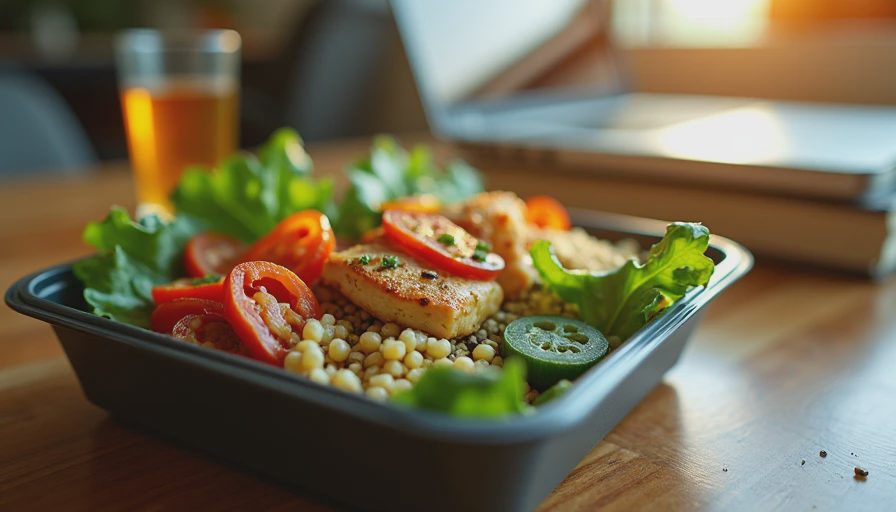
For a visual starting point, fill about half the container with vegetables or fruit, then divide the remaining space between protein and a carbohydrate. That is a guide, not a rule. Someone doing a lunchtime workout may want more rice or potatoes. Someone with a long afternoon meeting may appreciate extra beans and yogurt for staying power. High protein lunches for work should support your day, including the day when you do not exercise.
Watch the difference between convenient and accidentally expensive. A $4 can of tuna plus pantry ingredients can make two lunches, while a café grain bowl can cost $13 to $18 before a drink. There is nothing wrong with buying lunch, but keeping a few shelf-stable options at your desk gives you a backup when meal prep falls apart.

Use a flexible five-day lunch plan
On Monday, pack a chicken hummus wrap with fruit. Tuesday can be a tuna and bean bowl. Wednesday might use leftover dinner, such as turkey chili with rice. Thursday is a tofu or egg lunch assembled from refrigerated ingredients. Friday can be a purchased meal paired with a protein-rich snack, such as Greek yogurt, roasted edamame, or a cheese stick and fruit.
This approach is more sustainable than demanding homemade food every day. It also gives you a way to recover from a missed prep session. Keep canned tuna or salmon, whole-grain crackers, peanut butter, roasted chickpeas, and shelf-stable milk in a cabinet. In the refrigerator, keep yogurt, cottage cheese, eggs, washed greens, and baby vegetables when practical.
If you work from home, put lunch on your calendar. If you work at a job with limited refrigeration, use an insulated bag and choose foods that travel well, such as a peanut butter banana sandwich, tuna pouch with crackers, or a bean and rice container packed with ice. The plan should fit your workplace, not an imaginary kitchen with unlimited time.
Make lunch one small act of self-care
You do not need to earn lunch through exercise or “be good” all week to deserve a filling meal. High protein lunches for work are simply a tool for steady energy and fewer emergency food decisions. Start with one repeatable meal you like, prepare two portions, and notice how your afternoon feels. Then add variety slowly.
My favorite coaching rule is to make the healthy choice easier, not morally superior. Put the yogurt where you can see it. Portion trail mix before the week begins. Keep a fork in your desk drawer. Pack leftovers before you sit down for dinner. These tiny systems beat a dramatic plan that requires perfect motivation.
Choose one idea for tomorrow and make the first step almost boringly easy. Cook extra chicken tonight, put beans on your grocery list, or set a reminder to pack your lunch after dinner. Show up. Sweat a little. Come back. Your lunch habit can grow the same way.





No comments yet — be the first to share a thought.