If your day is already packed with work, school pickup, dishes, and the mysterious search for a missing shoe, free follow along workouts no equipment can make movement feel possible again. You do not need a home gym, a six-week transformation plan, or an hour of uninterrupted silence. You need a small open patch of floor and a coach who explains what to do next.
I have coached more than 3,000 everyday adults, and the biggest obstacle is rarely laziness. It is friction. If a workout requires driving somewhere, adjusting five machines, or learning a complicated routine, it is easy to postpone. A short guided session removes those decisions. Press play, listen for the next move, and let the structure carry you for a few minutes.
Why follow-along workouts work for busy adults
A follow-along workout gives you three useful things: a timer, a sequence, and a little accountability. You do not have to wonder whether you should do squats, lunges, planks, or jumping jacks next. The coach handles the transitions while you focus on breathing and form.
That matters when you are starting again after a long break. Uncertainty can make exercise feel intimidating, especially if you remember being told to push through everything. A good session offers clear options. You might perform a regular squat, sit to a sturdy chair, or reduce the range of motion. All three choices can train your legs without turning the workout into a test of character.
The goal is not to finish drenched and sore. The goal is to finish feeling like you could return tomorrow. Fifteen minutes done consistently will serve you better than a punishing workout that leaves you avoiding movement for a week.
How to set up a no-equipment session
Choose a space where you can extend your arms without bumping a table or lamp. A living room, bedroom, or clear section of a basement can work. Wear shoes if they make you feel stable, but many floor-based moves can be done barefoot on a non-slip surface. Keep water nearby and silence phone notifications before you begin.
Start with two or three minutes of easy movement. March in place, circle your shoulders, reach toward the ceiling, and take comfortable side steps. This raises body temperature and gives your joints time to move before the stronger exercises begin. It also helps you notice whether your knees, back, or shoulders need a gentler version today.
For a simple 15-minute format, use five exercises for 40 seconds each, resting 20 seconds between movements. Repeat the circuit twice, then spend two minutes walking slowly and breathing. Try a chair squat, wall push-up, alternating reverse lunge, standing march, and dead bug. These choices cover your legs, upper body, trunk, and cardiovascular system without equipment.
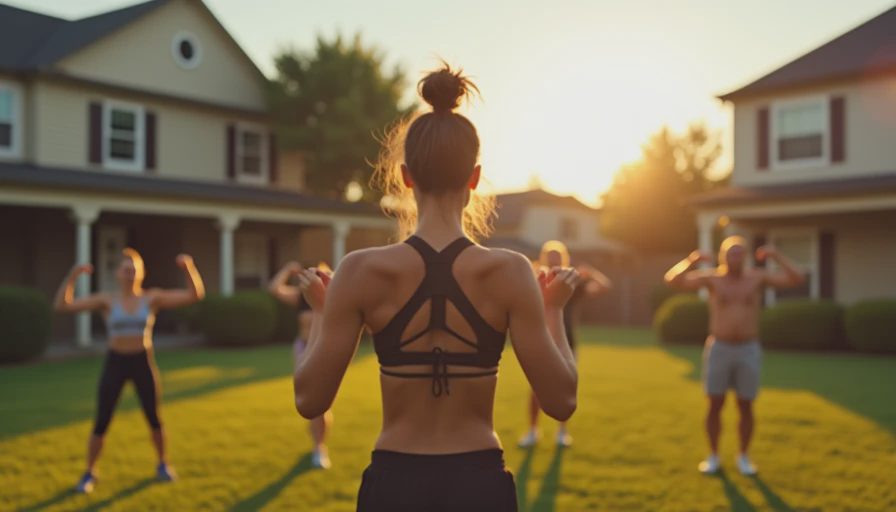
The best free follow along workouts no equipment sessions explain the purpose behind each move. A coach should tell you that the chair squat builds strength for standing from a seat, or that a wall push-up lets you practice pressing while controlling the load. That explanation gives the exercise a place in your daily life instead of making it feel like random choreography.
Beginner modifications that actually help
Modifying a workout is not a failure. It is how you match the exercise to your current capacity. If jumping bothers your knees, march briskly and drive your arms instead. If a floor plank feels too demanding, place your hands on a countertop and keep your body in a long, comfortable line. If getting down and up is inconvenient, choose standing core movements such as slow knee lifts with a gentle opposite-hand reach.
Use a smaller range of motion when balance or joint comfort is a concern. During a reverse lunge, step back only a short distance and hold a wall if needed. During a squat, lower until you can keep your whole foot connected to the floor. During a push-up, stop before your shoulders shrug toward your ears.
A useful intensity check is your breathing. You should feel challenged, but you should still be able to speak a short sentence. If you cannot recover during a brief rest, slow down, remove impact, or take an extra break. That is smart training, not quitting.
A practical weekly rhythm
You do not need to exercise every day to build a dependable routine. Start with three sessions spread across the week, such as Monday, Wednesday, and Saturday. On two other days, take a ten-minute walk or do a few mobility movements while waiting for dinner to cook. This rhythm gives your muscles recovery time while keeping movement familiar.
For the first two weeks, repeat the same beginner session. Familiarity improves coordination and makes it easier to notice progress. In week three, add five minutes, one extra circuit, or a slightly harder variation, but not all three at once. If sleep has been poor or your schedule is overloaded, keep the shorter version and count showing up as a successful training day.
You can also pair exercise with an existing habit. Press play after brushing your teeth in the morning, before your evening shower, or as soon as you close your work laptop. The cue matters because motivation is unreliable. A routine that begins automatically requires less negotiation with yourself.

What to look for in a free workout video
Not every video is equally useful for a beginner. Look for a clear time length, an instructor who demonstrates modifications, and a warm-up before the harder work. The coach should explain alignment in plain language and avoid treating pain as proof that the session is effective.
A good video also gives you enough time to change positions safely. Rapid transitions can make a simple routine unnecessarily stressful. If the instructor moves too quickly, pause the video or substitute a standing exercise. You are allowed to make the session fit your body and your room.
When searching for free follow along workouts no equipment, consider the style that helps you return. Some people prefer calm strength training. Others enjoy upbeat cardio or a circuit with a clear countdown. You do not need to choose the most intense option. Choose the one you can imagine doing again next week.
Your 15-minute starter plan
Here is a straightforward session to try today. Spend two minutes marching and reaching. Then complete 40 seconds of chair squats, 40 seconds of wall push-ups, 40 seconds of alternating step-backs, 40 seconds of standing knee lifts, and 40 seconds of slow bird-dog reaches from a hands-and-knees position or a countertop. Rest 20 seconds between exercises and repeat the circuit once.
Finish with two minutes of easy walking and relaxed breathing. Notice one useful result, such as warmer hands, less stiffness after sitting, or a calmer head. Those practical changes are worth tracking because they are more honest than chasing a dramatic before-and-after picture.
Stop for sharp pain, dizziness, unusual shortness of breath, or anything that feels wrong rather than simply challenging. If you have a medical condition, an injury, or questions about starting exercise, get personal guidance from a qualified health professional.
Free follow along workouts no equipment can give you structure without adding another bill or commute. Keep the session short enough to repeat, adjust movements without apology, and build from the version you can do today. Show up. Sweat a little. Come back.




No comments yet — be the first to share a thought.