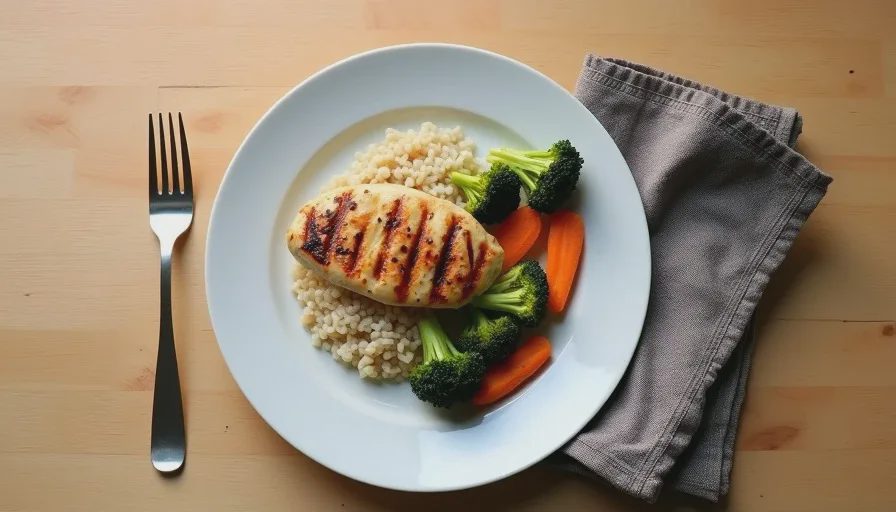
Let me start with a confession: I used to be the guy who weighed chicken breast at the gym cafe and logged every gram into an app. I was a certified trainer, so I thought I had to practice what I preached about "macros" and "optimal intake." Then I had kids, and I realized that measuring protein to the decimal point while a toddler smears yogurt on the wall is not just ridiculous — it's unsustainable. This post is about protein without the obsession, and what 30 grams actually looks like when you stop treating food like a chemistry set and start treating it like, well, food.
I'm Corey Nelson, and I've spent 12 years helping everyday adults in Omaha get stronger without losing their minds over nutrition. The single most common nutrition question I got wasn't about supplements or superfoods. It was simpler: "How much protein do I actually need, and how do I get it without living on grilled chicken and protein shakes?" Here's the answer, minus the food scale.
Why Protein Matters — Without the Hype
Protein does important things. It repairs muscle after you work out, keeps you full between meals, and helps you hold onto strength as you age. For busy adults who are trying to get stronger — especially over 40 — getting enough protein matters more than most people realize. But that doesn't mean you need to obsess over every gram.
The fitness industry has turned protein into a personality trait. You see guys shaking up tubs of powder between meetings and influencers preaching "one gram per pound of bodyweight" like it's scripture. That intensity scares off beginners. It makes protein feel like a chore, something only "serious" people track. And that's a shame, because protein is just food. You've been eating it your whole life.
The real question isn't "how do I optimize my protein timing around my workout window?" It's "did I eat enough today to support my body?" That's a much easier question to answer.
What 30 Grams Actually Looks Like
I like using 30 grams as a reference point because it's a solid amount for a meal, and it's easy to visualize. You don't need a scale to get close. Here's what roughly 30 grams of protein looks like in real food — no powder required.
Animal-Based Sources
Chicken breast: A piece about the size of a deck of cards, or roughly the palm of your hand. That's about 100–120 grams cooked, and it lands right around 30 grams of protein.
Ground beef (85% lean): A patty about the size of your palm and as thick as your thumb — roughly 100–115 grams cooked — gives you around 25–30 grams of protein.
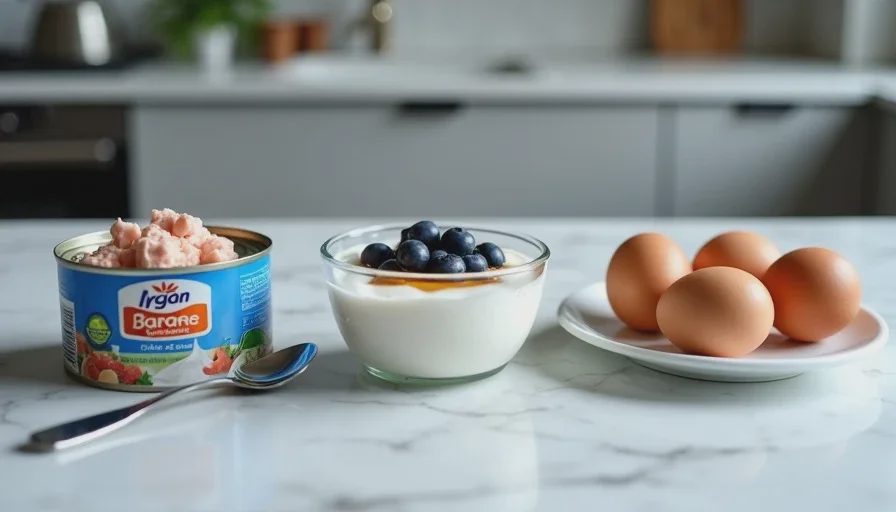
Canned tuna: One standard 5-ounce can, drained, is almost exactly 30 grams of protein. That's a ridiculously convenient option for busy days.
Greek yogurt: One cup of plain Greek yogurt (the 2% or 5% fat kind) sits around 20–25 grams. Add a handful of nuts or a scoop of cottage cheese and you're at 30.
Eggs: Three large eggs give you about 18–21 grams. Add a slice of cheese or a cup of milk and you're approaching 30. Eggs aren't a solo protein bomb, but they pair well.
Plant-Based Sources
Lentils (cooked): One and a half cups of cooked lentils gives you around 27 grams of protein. They're cheap, filling, and take well to almost any seasoning.
Tofu (extra-firm): Half a block (about 150–175 grams) lands around 20–25 grams. Pan-fry it or toss it in a stir-fry and you're set.
Chickpeas (cooked): One and a half cups gives you roughly 22–25 grams. Add some tahini or a sprinkle of seeds and you're at 30.
Edamame (shelled): One cup of cooked edamame has around 18–20 grams. Pair it with rice and you've got a complete protein meal.
The point isn't to memorize these numbers. It's to see that 30 grams of protein is not a mountain of food. It's a palm-sized piece of meat, a can of tuna, a bowl of Greek yogurt, or a generous scoop of lentils. You can hit it without a single protein shake.
How to Build a Protein Plate Without Math
If counting grams makes you want to give up, stop counting. Use your hand instead. This is the method I teach clients who are busy, tired, and allergic to diet apps.
The Palm Method
For most adults, one palm-sized portion of protein at each meal gets you in the right ballpark. That's about 25–35 grams per meal, depending on your hand size and the food. If you eat three meals a day and get a palm of protein at each one, you're likely hitting 75–100 grams of protein daily — which is plenty for most active adults trying to get stronger.
Add Protein to What You Already Eat
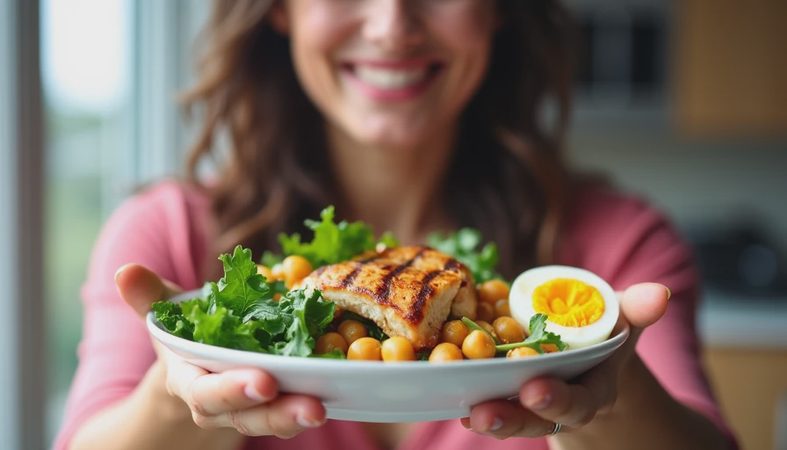
You don't need to redesign your whole menu. Just ask one question at each meal: Where's the protein here? If your breakfast is toast and coffee, add a couple of eggs or a cup of Greek yogurt. If your lunch is a salad, add a can of tuna or half a block of tofu. If your dinner is pasta, stir in some ground beef or lentils. Small additions compound.
That's it. No macro tracking, no weighing food, no obsessive label reading. Just a quiet awareness that every meal should include some kind of protein, and a rough sense of what "enough" looks like.
What About Protein Shakes?
Protein powder is not a villain. It's a convenience food, and there's nothing wrong with using it when you're short on time or appetite. But it's not magic, and it's not required. I'd rather you eat a real meal with protein than drink a shake because you think it's "cleaner." Real food comes with other nutrients, fiber, and the satisfaction of actually chewing something. If you like shakes, have one. If you don't, skip them. Your muscles won't notice.
Why I Stopped Obsessing — and You Can Too
I spent years trying to hit a perfect protein target every single day. I weighed chicken. I ate cold egg whites. I stressed over whether my post-workout meal was timed right. Looking back, I was strong, sure — but I was also annoying to eat with, and my relationship with food was getting weird.
Then my daughter Harper was born, and I didn't have the bandwidth to weigh anything. I started eating what my family ate, just with an extra serving of whatever protein was on the table. My strength didn't crash. My recovery didn't suffer. I just stopped wasting mental energy on something that didn't need to be that complicated.
One of my clients, a mom of two named Jess, told me she used to feel guilty for not tracking her macros. She'd eat a turkey sandwich and think, "Is this enough protein? Is the bread ruining it?" We replaced that guilt with one simple rule: put a palm-sized protein on your plate at lunch and dinner. Three months later, she told me she'd stopped thinking about food constantly and had more energy than she'd had in years. Not because her protein was "perfect," but because she was eating enough — and she wasn't stressed about it.
Show Up. Eat a Little. Move On.
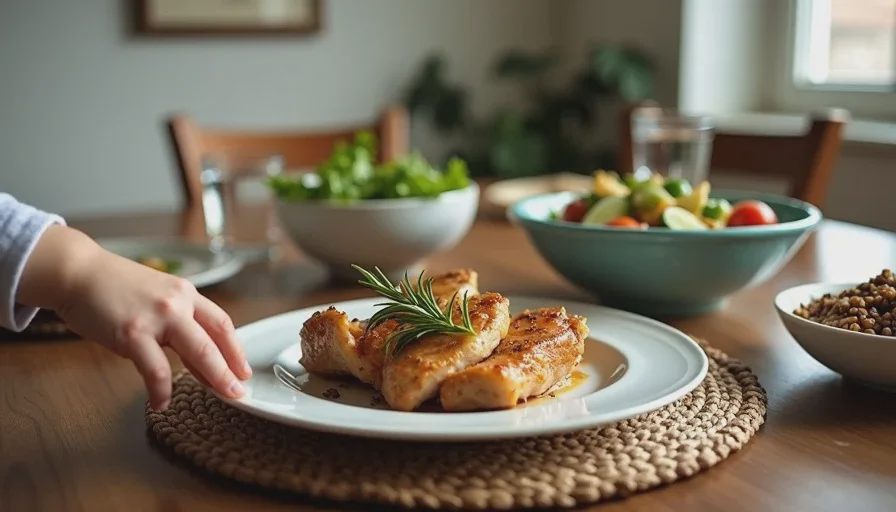
Protein without the obsession looks like this: a palm of chicken on your plate, a can of tuna on your salad, a bowl of Greek yogurt before work. It's simple, boring even, and it works. You don't need to know your exact number. You don't need to time your intake to the minute. You just need to show up at each meal and ask, "Where's the protein?"
The food plate is supposed to support your life, not run it. So the next time you sit down to eat, give yourself a break. Aim for a palm, eat until you're satisfied, and go move. That's enough. That's the whole recipe.

No comments yet — be the first to share a thought.