A yoga sculpt class blends familiar yoga positions with strength exercises, faster transitions, and a little extra heat. If you are picturing an intimidating room full of bendy people balancing on one hand, take a breath. Most sessions are built for regular adults who want to move, sweat, and feel more capable without signing up for an extreme fitness challenge. A yoga sculpt class can be a practical choice for beginners, desk workers, busy parents, and anyone who wants more strength in their weekly routine.
What happens in a yoga sculpt class?
A typical yoga sculpt class starts with several minutes of easy movement. You might cycle through cat-cow, downward-facing dog, lunges, and gentle sun salutations while your instructor explains the plan. The warm-up matters because it raises your body temperature and gives your joints time to move before the harder work begins.
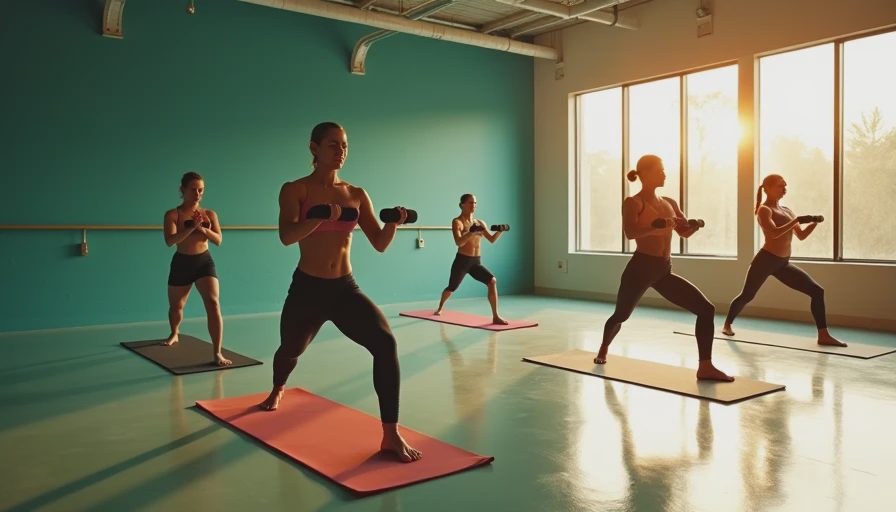
After that, the class usually alternates between yoga-inspired flows and strength intervals. A low lunge could lead into shoulder presses. Chair pose might be followed by squats, pulses, or biceps curls. A plank sequence may include mountain climbers or a controlled knee tap. The goal is not to make every move look dramatic. The goal is to challenge your muscles while keeping your breathing and alignment manageable.
Most studios offer light hand weights, often between two and five pounds, although some classes use heavier options for specific exercises. You may also use a yoga mat, resistance band, block, or ankle weights. The room might be warm, but it should not feel like a test of endurance. You can pause, lower the weights, or take the heat down by stepping outside for a minute.

Why yoga sculpt can build useful strength
Yoga alone can improve body awareness, balance, mobility, and muscular endurance. Adding resistance gives your muscles a clearer reason to adapt. That combination is why a yoga sculpt class can feel different from a traditional slow-flow session. You are practicing movement quality while also asking your legs, shoulders, arms, and core to work for longer periods.
The strength benefit is usually practical rather than flashy. Carrying groceries from the car, standing up from the floor, lifting a child, or walking up stairs can feel more comfortable when your legs and trunk are conditioned. You do not need to leave class completely exhausted to make progress. A session that feels like a seven out of ten effort, followed by enough recovery to return later in the week, is often more useful than a workout that leaves you sore for four days.
For beginners, the main win is learning how to control basic patterns. Squats teach you to bend at the hips and knees. Lunges challenge balance one leg at a time. Planks teach you to brace without holding your breath. Those skills transfer to many other workouts and everyday tasks.
Is a yoga sculpt class good for beginners?
It can be, especially when the instructor gives clear options. Before booking, look for descriptions such as beginner-friendly, all levels, low impact, or modifications offered. You can also email the studio and ask whether the class includes jumping, heated rooms, or advanced inversions. That two-minute question can prevent a frustrating first visit.
When you arrive, tell the instructor that you are new or returning after a long break. You do not need to provide a medical history in front of the room. Simply say that you would appreciate modifications. A good instructor will show a lower-impact version without making it feel like a punishment.
For example, step back from a lunge instead of jumping. Hold a plank from your knees instead of your toes. Use body weight instead of dumbbells during the first few classes. If your wrists bother you, make fists, use yoga blocks, or substitute a forearm position when appropriate. Sharp pain, dizziness, chest discomfort, or unusual shortness of breath is a reason to stop and seek medical guidance, not something to push through.
How to prepare without overthinking it
You need less equipment than social media might suggest. Wear comfortable clothes that let your knees and shoulders move freely, bring water, and arrive a few minutes early. A small towel is useful if the room is warm. Eat normally; a light snack such as yogurt, fruit, or toast can help if you are hungry before class. You do not need a special detox, expensive leggings, or a matching set of weights.
If you are taking a yoga sculpt class online, clear a space roughly the length of a yoga mat plus one step in every direction. Check that your dumbbells are not on a slippery floor and move coffee tables, toys, and pet bowls out of the way. During a livestream, position your camera so you can see the instructor without craning your neck. The best setup is the one you will actually use on a busy Tuesday.
How often should you attend?
Start with one yoga sculpt class per week for two or three weeks. That gives you time to notice how your knees, wrists, shoulders, and lower back respond. If recovery feels good, add a second weekly session with at least a day between harder workouts. On other days, take a walk, do ten minutes of mobility, or complete a simple strength routine at home.
A sustainable week might include one class on Monday, a twenty-minute walk on Wednesday, and another class on Saturday. Someone with a packed schedule might attend one live session and practice a fifteen-minute version at home. Consistency matters more than collecting difficult workouts. If you miss a week because of travel, illness, or family responsibilities, you have not lost everything. You simply resume at a sensible pace.
Your first few sessions may create muscle soreness, particularly in your glutes and shoulders. Gentle walking, regular meals, sleep, and fluids are more helpful than trying to punish the soreness away. Increase weights only when you can maintain steady breathing and controlled movement.
How to choose the right class and instructor
Pay attention to the class description and the instructor's teaching style. A strong yoga sculpt class explains why you are doing a movement, demonstrates it from more than one angle, and gives you time to change positions safely. The instructor should make modifications sound normal, not like an apology. You should hear reminders to breathe, brace, soften your knees, and stop when something feels wrong.
Price also does not guarantee quality. A community recreation center may offer a solid class for $8 to $15, while a boutique studio may charge $20 to $35 for a drop-in visit. Online memberships can range from free trial content to roughly $20 or $30 per month. Try one session before committing to a large package. Notice whether you leave feeling pleasantly worked or pressured to prove something.
A yoga sculpt class is a tool, not a personality test. You can use it to build confidence, support daily movement, and add variety to a simple fitness routine. Start lighter than your ego suggests, learn the options, and let your body guide the pace. Show up. Sweat a little. Come back.





No comments yet — be the first to share a thought.